
1971: Decimalization Day — A Child’s Perspective on the "Old Money"
On February 15, 1971, the world changed—or at least, the contents of my pockets did. To the adults, "Decimal Day" was a logistical headache involving conversion charts and banking anxieties. To a ten-year-old boy growing up in Dorset, it felt like the sudden end of a magical, heavy, and delightfully complicated era. Before the "New Pence" arrived, money had gravity. It had history. It had a vocabulary that felt like it belonged in a Dickens novel rather than a modern seaside town.
C. NOSTALGIA
1971: Decimalization Day — A Child’s Perspective on the "Old Money"
On February 15, 1971, the world changed—or at least, the contents of my pockets did. To the adults, "Decimal Day" was a logistical headache involving conversion charts and banking anxieties. To a ten-year-old boy growing up in Dorset, it felt like the sudden end of a magical, heavy, and delightfully complicated era.
Before the "New Pence" arrived, money had gravity. It had history. It had a vocabulary that felt like it belonged in a Dickens novel rather than a modern seaside town.
The Weight of a Shilling
The first thing you noticed about "Old Money" was the sheer physical presence of it. If you were lucky enough to have a few pennies in your pocket, you knew it. They were massive copper discs that felt like they could double as weapons in a pinch.
The Threepenny Bit: The "joey." It was chunky, twelve-sided, and brassy. It felt more like a game piece than currency.
The Sixpence: The "tanner." Small, silver, and the ultimate prize for a Sunday chore.
The Shilling: The "bob." A solid, dependable unit of commerce.
When you dropped a handful of old coins onto a wooden counter, it made a sound—a resonant, metallic clatter—that the new, lighter coins could never quite replicate.
The Math Lesson Nobody Wanted
As a kid, the math was part of the charm. There were 12 pennies to a shilling and 20 shillings to a pound. That meant 240 pence to the pound. Why? Because that’s how it was. We lived in a world of base-12 and base-20, and we were better at mental arithmetic because of it.
Then came the transition. Suddenly, the pound was divided into 100 "New Pence." The government issued blue conversion cards, and shops displayed prices in both old and new money. For a few weeks, the country was in a state of dual-currency limbo. You could hand over a shilling and get back "5p." It felt like a magic trick where you were somehow losing out, even if the math said otherwise.
The Great Sweet Shop Crisis
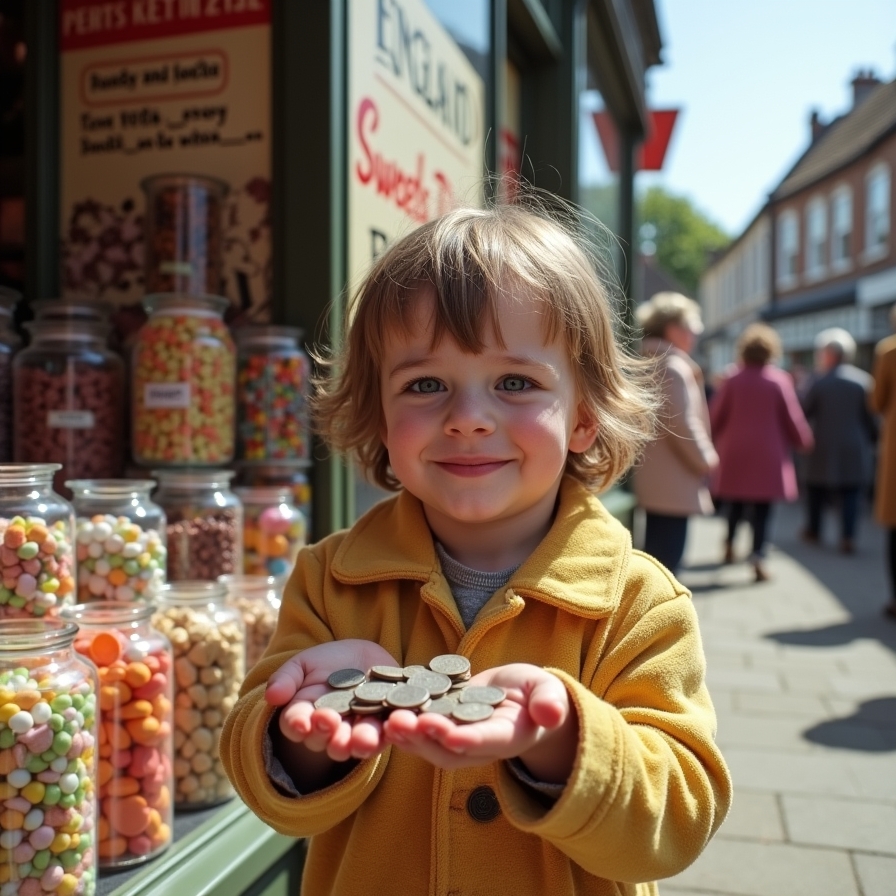
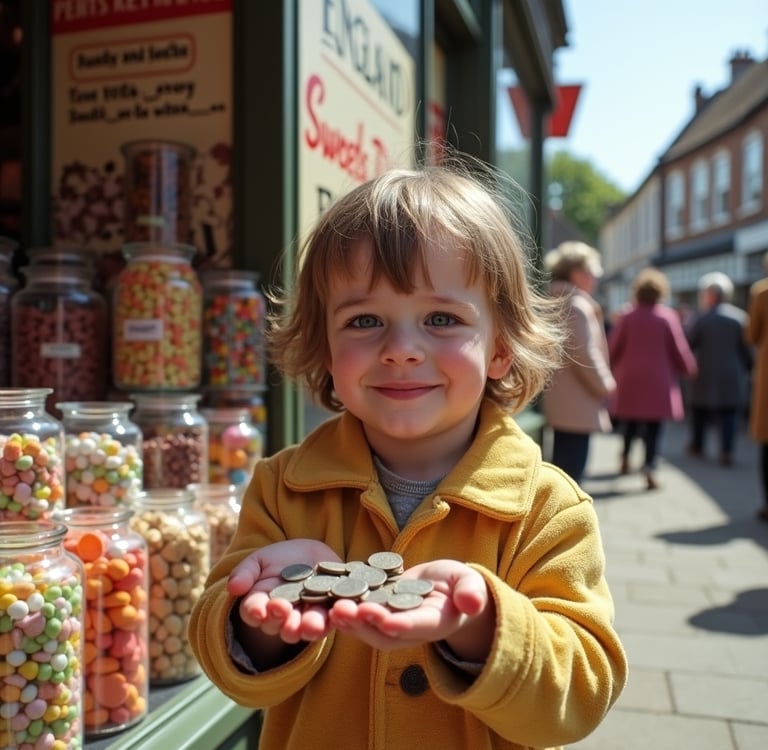
For a child in the early 70s, the true impact of Decimalization wasn't measured in inflation or international trade—it was measured at the counter of the local sweet shop.
Before 1971, a single penny (an old, heavy one) could get you four Black Jacks or Fruit Salads. When the "New Penny" arrived, it was worth 2.4 old pence. The math was messy, and suddenly, the "penny chew" was in jeopardy. We watched with suspicion as the jars of Gobstoppers and Shrimps were re-labeled.
There was a distinct feeling that the "New Pence" were "toy money." They were smaller, thinner, and lacked the regal dignity of the coins that had been in circulation since the days of George V.
A Farewell to the Half-Crown
The biggest loss, in my eyes, was the Half-Crown. It was a magnificent coin—large, silver-colored, and worth two shillings and sixpence. Having a Half-Crown made you feel like a landed gentleman. It was the "big money." When it was phased out in favor of the 50p piece (the world’s first seven-sided coin), something felt lost.
The 50p was clever, sure. It was distinctive. But it didn't have the soul of the Half-Crown. It didn't feel like it had been pulled from a pirate's treasure chest.
The End of the "Old" World
Looking back from 2026, Decimalization Day feels like one of the final anchors to the Victorian and Edwardian eras being cut loose. We traded the eccentric, heavy, and illogical beauty of £sd for the streamlined efficiency of the decimal system.
It was progress, certainly. It made life easier for the banks and the tourists. But every time I see a modern coin, I can’t help but miss the weight of a heavy copper penny and the satisfaction of a brassy threepenny bit.
Do you remember the transition, or did you grow up in the "100-pence" world? What’s the one piece of "Old Money" you wish you’d kept in a drawer?