
Beyond the Gold Standard: Weaving Currency into Your Fantasy World-Building
When building a fantasy world, it’s easy to default to the classic "Gold, Silver, Copper" system. It’s intuitive, easy to manage in games, and mirrors a lot of our own history. But money is far more than just a convenient way to buy a broadsword; it is a profound reflection of a culture's history, priorities, technology, and relationship with magic. If you are developing different realms or civilizations within your fictional world, one of the most effective ways to establish their distinctiveness is by designing unique economic systems. Here is an exploration of how different realms might handle the concept of currency, moving beyond the standard shiny coins.
A. THE "ADD-ONS"
Beyond the Gold Standard: Weaving Currency into Your Fantasy World-Building
When building a fantasy world, it’s easy to default to the classic "Gold, Silver, Copper" system. It’s intuitive, easy to manage in games, and mirrors a lot of our own history. But money is far more than just a convenient way to buy a broadsword; it is a profound reflection of a culture's history, priorities, technology, and relationship with magic.
If you are developing different realms or civilizations within your fictional world, one of the most effective ways to establish their distinctiveness is by designing unique economic systems. Here is an exploration of how different realms might handle the concept of currency, moving beyond the standard shiny coins.
1. The Roots of Economy: Why and How Money Starts
Before diving into the complex systems, it's worth considering the baseline for most fantasy societies: the barter system.
The Barter and Trade Economy
In small, isolated, or agrarian communities, formal coinage might be entirely unnecessary. The farmer trades grain to the blacksmith for tools, and the blacksmith trades tools for wool from the shepherd.
World-Building Note: A purely barter economy is based on trust and mutual need. Introducing coins to this setting can represent colonization, integration into a larger empire, or the rise of a merchant class.
2. The Standard: Metallic and Representative Currency
This is the system most of us are familiar with. Governments mint coins of precious metals, assigning them a standardized value.
How to Make Standard Coinage Unique:
Names and Lores: Avoid "Gold Piece." Name the coins based on your world's lore.
Example: The Crowns of the Kingdom of Elendor (featuring the image of the ruling monarch).
Example: The Sun-Discs of the desert empire (representing their patron deity).
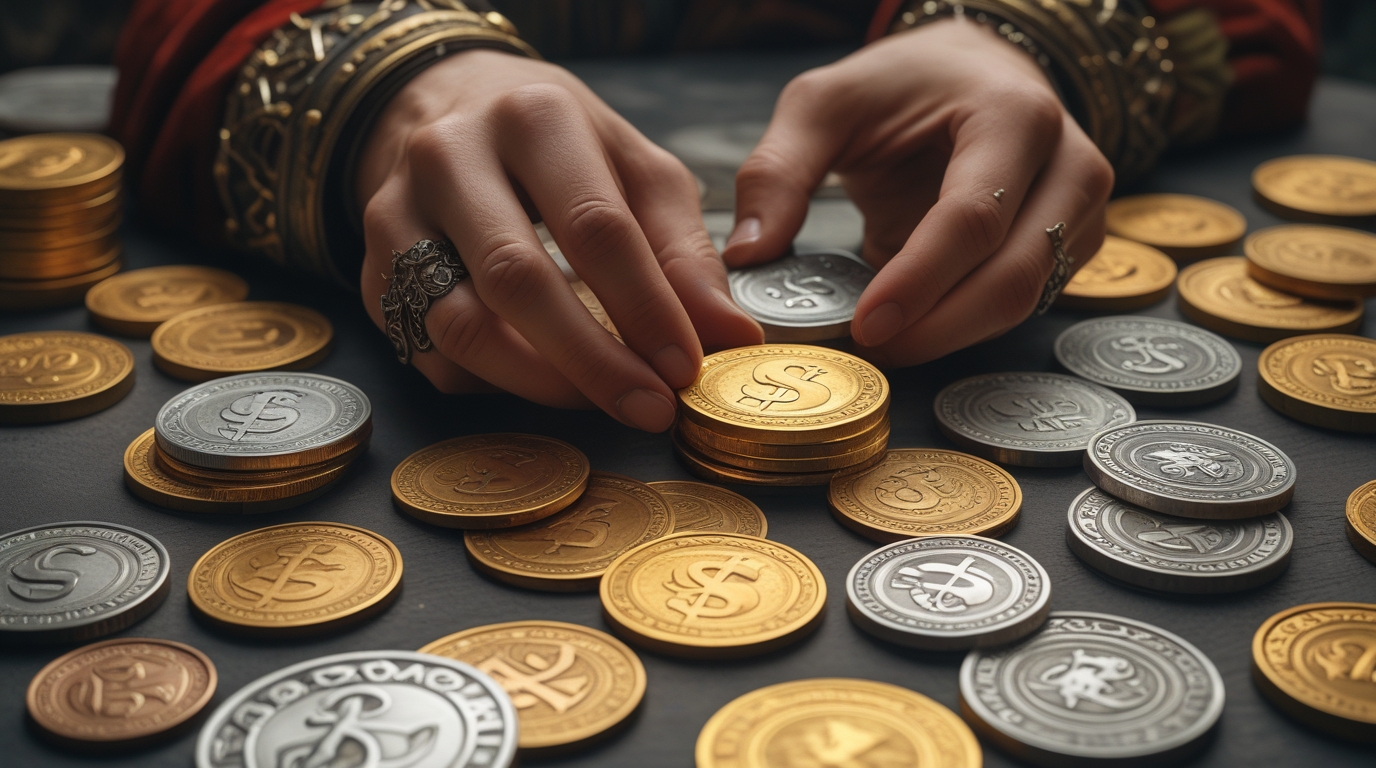
Design and Inscriptions: What does the coin look like? Is it round, square, or octagonal? What is stamped on it? This is prime real estate for world-building.
The "Representative" Twist: If metal is scarce or the government is centralized and powerful, they might use representative currency. These are tokens (paper money, clay tablets, specific types of shells) that have no intrinsic value themselves but represent wealth stored elsewhere.
3. Fleshing Out Different Realms: Abstract and Creative Currencies
This is where you can let your creativity run wild and establish truly different economies in your different realms.
A. Commodity-Based Economies (The Realm of Survival)
In societies focused on survival, currency might be based on essential commodities.
The Salt Realm: In a sea-faring culture or a desert civilization, salt is crucial for survival (preserving food). Here, salt tablets or standardized bags of rare spices might serve as the primary currency.
The Livestock Exchange: In tribal or nomadic societies, wealth is measured in herds. While difficult to carry, "I’ll give you three goats for that sword" is a perfectly acceptable offer.
B. Magical and Spiritual Economies (The Realm of Power)
If your world is deeply saturated with magic, the economy will inevitably reflect that.
Soul Shards or Mana Crystals: In realms where magical ability is a commodity, actual power might be the currency. Mages might trade charged crystals. Darker societies might trade actual "soul shards" harvested from sentient beings, representing the ultimate store of value.
World-Building Impact: This system immediately establishes a hierarchy where those who can manipulate magic (or capture it) are the wealthy elite.
The Economy of Favors: This is common in highly sophisticated societies, such as an ancient Elven court or a powerful thieves' guild. Money doesn't matter; reputation and obligation are everything. You pay for your meals by knowing the right people, and you owe favors that might be called in decades later.
C. Biological and Temporary Economies (The Impermanent Realm)
This concept explores currencies with limited lifespans or specific ecological constraints.
The Bloom Standard: In a highly druidic or nature-centric society, currency might be a rare type of magical seed or a specific flower that only blooms once every ten years. These currencies must be stored carefully and cannot be accumulated indefinitely, preventing extreme wealth disparity but creating seasonal economic cycles.
Chitin and Scale: A subterranean or monstrous culture might use specific insect carapaces or rare dragon scales. The value fluctuates based on the difficulty of hunting the creature.
4. How Currency Impacts Your Narrative
Finally, remember that the economy you build should serve your story, not just act as set dressing.
Plot Hooks: A protagonist finds a hoard of treasure, only to realize the coins are from a fallen empire and are considered debased or useless. This forces them to find a different solution than just "buying their way out."
Establishing Tone: A dark fantasy world where the only accepted currency is a pinch of a vital ingredient or a day of one's lifespan instantly establishes the grim stakes.
Creating Conflict: War over trade routes (like control of the salt flats) or the discovery of a new source of "mana crystals" provides a tangible and relatable motivation for large-scale conflicts.
The Conclusion: When designing your fantasy realms, look past the standard gold piece. Ask yourself: What does this culture value most? What resources are scarce? How do they interact with magic? The answer to these questions will lead you to a unique and vibrant economic system that will make your world feel truly alive.