
British Sweets vs. American Candy: A Nostalgic Comparison
Every culture has its culinary foundational stones, but few evoke the raw, immediate power of childhood nostalgia quite like confectionery. For someone who spent their youth in Dorset hand over fist with pre-decimal copper pennies, and now navigates the bright aisles of supermarkets in the Pacific Northwest, the confectionery aisle is a fascinating study in cultural architecture. It isn’t just a matter of sugar content; it’s a fundamental difference in texture, flavor profiles, and social history. To a narrative technician who values strict formulas and system consistency, comparing British Sweets to American Candy reveals two entirely different operational philosophies of confectionery.
C. NOSTALGIA
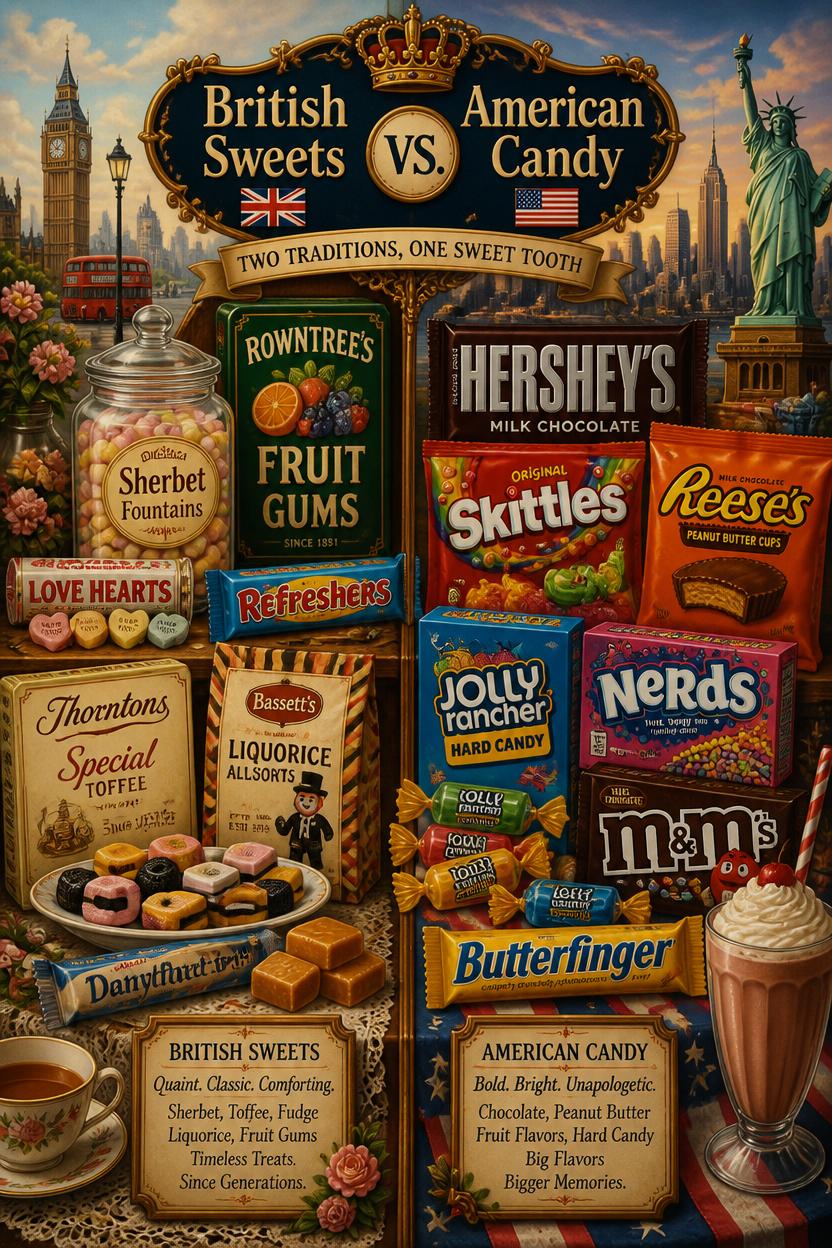
British Sweets vs. American Candy: A Nostalgic Comparison
Every culture has its culinary foundational stones, but few evoke the raw, immediate power of childhood nostalgia quite like confectionery. For someone who spent their youth in Dorset hand over fist with pre-decimal copper pennies, and now navigates the bright aisles of supermarkets in the Pacific Northwest, the confectionery aisle is a fascinating study in cultural architecture.
It isn’t just a matter of sugar content; it’s a fundamental difference in texture, flavor profiles, and social history. To a narrative technician who values strict formulas and system consistency, comparing British Sweets to American Candy reveals two entirely different operational philosophies of confectionery.
1. The Chocolate Equation: Dairy Milk vs. High-Fructose Reality
The most jarring system crash a British expat experiences in the US occurs during their first bite of a standard American chocolate bar.
[ THE TRANSATLANTIC CHOCOLATE FORMULA ]
+-------------------------------------------------+
| BRITISH STANDARD: Higher milk fat, higher cocoa |
| mass, pure cane sugar. |
+-------------------------------------------------+
|
v <- Two entirely different taste profiles
+-------------------------------------------------+
| AMERICAN STANDARD: Lower cocoa, high-fructose |
| corn syrup, butyric acid. |
+-------------------------------------------------+
The British Blueprint: British chocolate (like classic Cadbury or historical mainstays) relies heavily on a high milk-to-sugar ratio and pure cane sugar. The result is a smooth, velvety, and distinctly creamy texture that melts at a relatively low temperature.
The American Blueprint: American chocolate is engineered for resilience. To survive transit across massive, varied climate zones, it utilizes less cocoa mass and often swaps cane sugar for high-fructose corn syrup. Furthermore, many American formulas involve controlled lipolysis, which produces butyric acid. To an American palate, this gives the chocolate a familiar, beloved tang; to a British palate, it tastes distinctly sour.
2. The Texture Divide: Chews, Puffs, and Gums
The nomenclature itself tells a story. In the UK, you go to the corner shop for a bag of "sweets"; in the US, you go to the convenience store for "candy." The difference in texture is vast.
The British Sweetshop Classics
Before Decimalization Day in 1971, a single heavy penny could buy a small handful of treasures at the local sweetshop counter.
The Puffed Tradition: Take the legendary Lemon Puffs or light, crisp honeycomb treats. They rely on air and structure, shattering cleanly when bitten.
The Caramelized Standard: Then there was the unique bar like Caramac—not chocolate at all, but a solid block of condensed milk and sugar caramelized into a distinct, pale-gold wafer. It was ultra-sweet, highly smooth, and carried a completely unique texture profile.
Wine Gums and Fruit Pastilles: British fruit sweets value a firm, tooth-testing bite. They rely heavily on gelatins or starches that require deliberate chewing, releasing deep, juice-heavy flavors over time.
The American Candy Standard
American non-chocolate candy embraces a softer, more rapid release of high-fructose sweetness.
The Soft Chew: Treats like Starburst (originally British Opal Fruits, but adapted) or Laffy Taffy focus on a pliable, highly malleable texture that dissolves quickly.
The Tangy Punch: America dominates the "Sour" market. Candies like Sour Patch Kids or Warheads use heavy outer coatings of malic and citric acid to deliver an immediate, high-voltage jolt to the salivary glands, balancing the intense corn-syrup sweetness beneath.
3. The Great Taste Exchange
Confectionery Attribute
British Sweets
American Candy
Primary Sweetener
Pure Cane Sugar / Condensed Milk.
High-Fructose Corn Syrup.
Chocolate Texture
Creamy, high-fat, rapid melt profile.
Firm, stable, tangy profile.
Flavor Focus
Blackcurrant, rhubarb, caramel, deep fruit tones.
Cherry, grape, blue raspberry, intense sour tones.
4. Environmental Variables of Memory
Ultimately, nostalgia is an atmospheric setting. A bar of chocolate eaten while sitting on a wooden bench overlooking a misty Puget Sound harbor in Skagit County is a wonderful experience. But it lacks the physical, tactile weight of childhood memories.
Nothing can quite replicate the feeling of a ten-year-old boy handing over a brassy threepenny bit at a Dorset shop counter, watching the shopkeeper tilt a massive glass jar of pear drops or cola cubes, and walking out with a white paper bag translucent with sugar dust.
American candy is brilliant at delivering high-energy, vibrant, and innovative flavor bursts perfect for a long cross-country road trip. But for a quiet evening in the writing studio, it’s those rich, creamy, and structural old-world British sweets that will always hold the ultimate key to the archive of memory.
Are you a purist for the rich, creamy melt of old-world chocolate and traditional boiled sweets, or do you love the sharp, high-voltage fruit punch of modern American candy?