
Deciphering the Pika’Al: A Beginner’s Guide to My Ancient Scriptures
When introducing readers to an expansive epic like The Southern Lands, a writer faces a distinct world-building challenge. You aren't just creating geography; you are constructing entire frameworks of belief, philosophy, and history. In my work, the spiritual and philosophical anchor of the continent relies on a set of texts known to scholars, travelers, and heroes alike: the maxims of Pika'Al. To the uninitiated, diving into these ancient scriptures can feel a bit like trying to read a piece of archaic software code without a manual. As a narrative technician who prefers to hard-code the rules of a universe before writing Chapter One, I treat these scripture structures as a precise logical system. Here is a diagnostic beginner's guide to deciphering the core principles, structure, and meaning behind the words of Pika'Al.
A. THE "ADD-ONS"
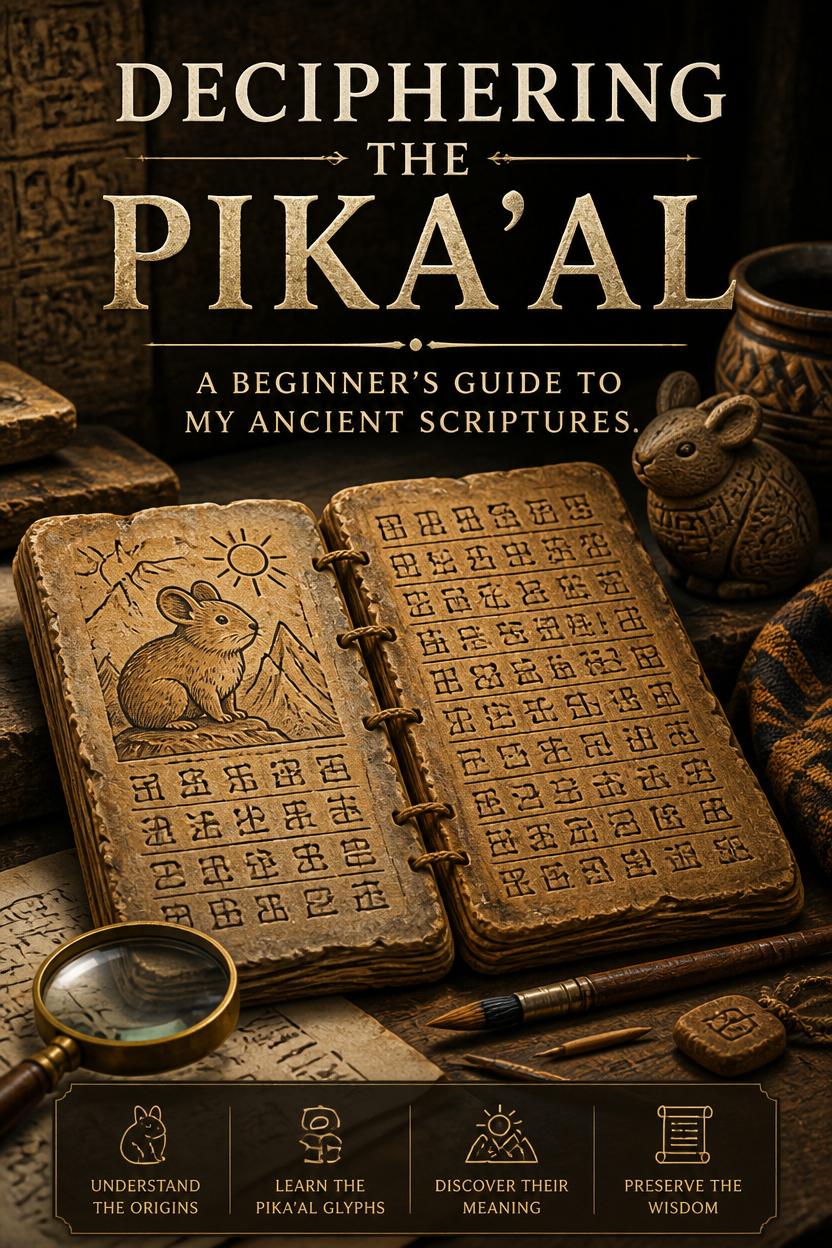
Deciphering the Pika’Al: A Beginner’s Guide to My Ancient Scriptures
When introducing readers to an expansive epic like The Southern Lands, a writer faces a distinct world-building challenge. You aren't just creating geography; you are constructing entire frameworks of belief, philosophy, and history. In my work, the spiritual and philosophical anchor of the continent relies on a set of texts known to scholars, travelers, and heroes alike: the maxims of Pika'Al.
To the uninitiated, diving into these ancient scriptures can feel a bit like trying to read a piece of archaic software code without a manual. As a narrative technician who prefers to hard-code the rules of a universe before writing Chapter One, I treat these scripture structures as a precise logical system.
Here is a diagnostic beginner's guide to deciphering the core principles, structure, and meaning behind the words of Pika'Al.
1. The Structure of the Citations
Before analyzing the philosophy, you need to understand how the text is calibrated. When you see a reference like Pika'Al 14:2, you are looking at a precise dual-coordinate system:
The Movement (The First Number): This represents the overarching thematic scroll or "Movement" of the scripture. There are distinct sections dedicated to leadership, survival, the nature of magic, and the cosmic balance of the world.
The Verse (The Second Number): This points directly to the specific maxim or instruction set within that movement.
Because my world-building is strictly managed inside a Series Bible, these coordinates are entirely consistent. If a character quotes a verse in an early standalone tale, that exact same verse will carry identical thematic weight and structural logic when referenced deep within a multi-book arc.
2. The Core Philosophy: Pragmatic Optimism
Many fictional religions or ancient texts default to cryptic doom-mongering or ethereal, passive poetry. The scriptures of Pika'Al are entirely different structural entities. They are intensely practical, action-oriented, and grounded in human agency.
Take one of the most widely cited core directives in the text:
"Be positive and plan for success." — Pika'Al 14:2
[ THE DIALECTIC OF PIKA'AL 14:2 ]
+-------------------------------------------------+
| THE INTENT: "Be positive..." |
| - The emotional baseline. Rejecting fatalism. |
+-------------------------------------------------+
|
v
+-------------------------------------------------+
| THE EXECUTION: "...and plan for success." |
| - The technician's clause. Action & strategy. |
+-------------------------------------------------+
This verse perfectly captures the dual-engine of the scripture's philosophy. It demands an emotional baseline of optimism ("Be positive") but balances it immediately with a technician's clause ("plan for success"). To Pika'Al, hope without a blueprint is useless; victory is a design problem that requires preparation, deliberate choices, and hard work.
3. Deep-Mapping the Prophetic Alignment
In The Southern Lands, these scriptures don't exist in a historical vacuum. They are intrinsically linked to the geographical landscape and the overarching Prophecy of Xannu.
When mapping out the topography of a new book or standalone installment, I treat the verses of Pika'Al as environmental variables.
The Geography Connection: Ancient monuments, hidden fonts of magical power, and critical mountain passes are often inscribed with specific verses.
The Prophetic Mirror: While the Prophecy of Xannu outlines the macro path of destiny (often filled with dangerous ambiguity and systemic traps), the maxims of Pika'Al act as the micro guide, showing characters how to maintain their moral clarity, leadership consistency, and practical focus while walking that treacherous road.
4. How to Read the Text as a Critic
When reading characters who interact with these ancient words, pay close attention to how they use them. Just like any powerful historical document, the scriptures are a mirror for whoever holds them:
The Heroes: Use the maxims as a personal internal code—a source of quiet strength to steady their hands when a scene breaks or an impossible, logic-defying threat emerges.
The Villains: Frequently engage in "systemic misinterpretation." They will take a highly structured command regarding strategy or success and twist its logic to justify a ruthless quest for absolute power.
The Final Compile
Ultimately, the scriptures of Pika'Al are designed to make The Southern Lands feel like a lived-in, fully realized universe long before you read the opening chapter. They give the cultures a shared vocabulary and provide the characters with a foundational philosophy to test their choices against.
A great ancient text shouldn't just be an info-dump of dead lore; it should be a vital, active piece of narrative clockwork that keeps the stakes high and the characters growing with every single verse.
When you encounter fictional scriptures or philosophies in an epic fantasy world, do you prefer them to be deeply cryptic and open to poetic interpretation, or do you enjoy an action-oriented, practical code of conduct like the maxims of Pika'Al?