
Forensics of 1908: How I Researched Early Crime-Solving for The Witches of Wormwood House
When writing a historical paranormal series set explicitly in 1908, a writer faces a fascinating structural challenge. You aren't just dealing with the laws of magic or the boundaries of your coven; you are dropping your characters into a very specific point in human technological history. In the Wormwood House series, where an ensemble of seven witches navigates the dark shadows of Edwardian Dorset, the local authorities are beginning to look at crime scenes with entirely new eyes. To make a 40,000-word investigative episode feel grounded and authentic, the supernatural elements must directly collide with the real-world forensic logic of the era. Here is a look behind the curtain at the "Technician's Approach" I used to research and hard-code early 20th-century criminology into my world-building tech tree.
A. THE "ADD-ONS"
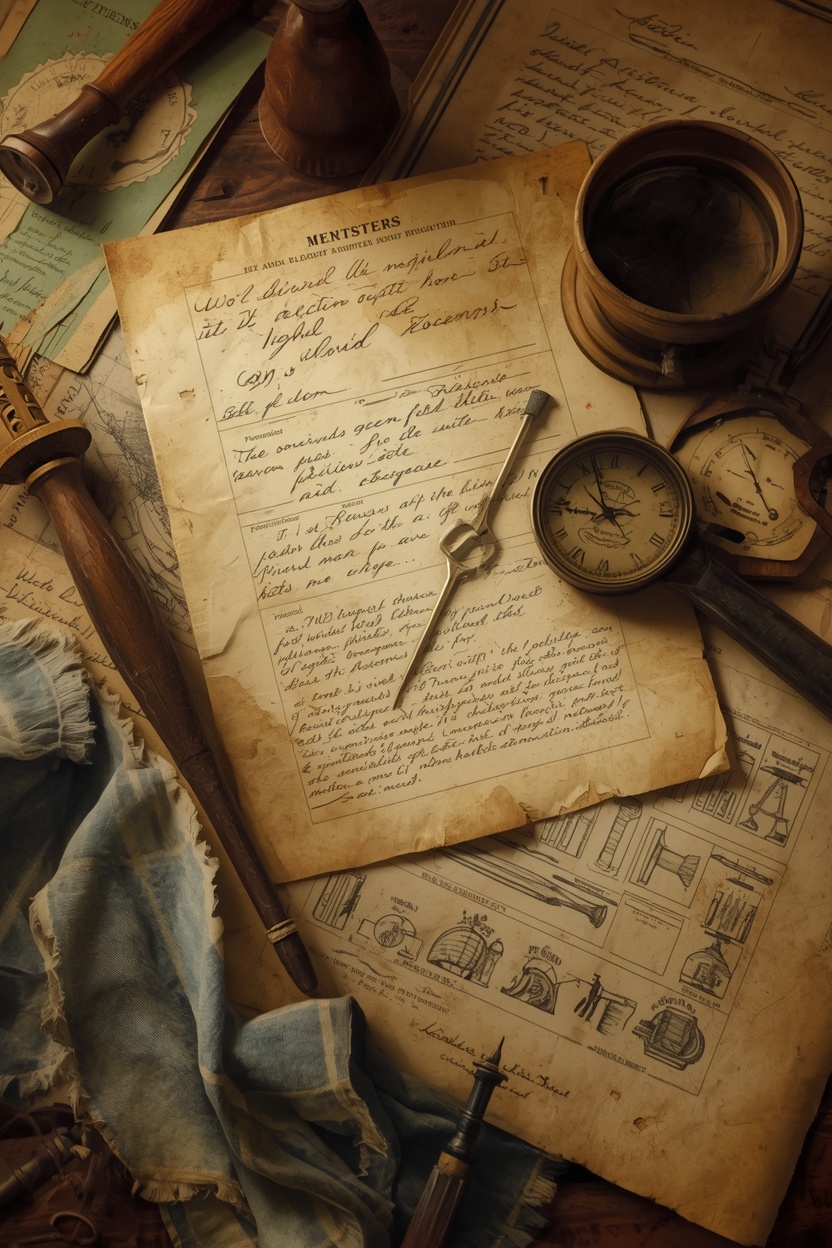
Forensics of 1908: How I Researched Early Crime-Solving for The Witches of Wormwood House
When writing a historical paranormal series set explicitly in 1908, a writer faces a fascinating structural challenge. You aren't just dealing with the laws of magic or the boundaries of your coven; you are dropping your characters into a very specific point in human technological history. In the Wormwood House series, where an ensemble of seven witches navigates the dark shadows of Edwardian Dorset, the local authorities are beginning to look at crime scenes with entirely new eyes.
To make a 40,000-word investigative episode feel grounded and authentic, the supernatural elements must directly collide with the real-world forensic logic of the era. Here is a look behind the curtain at the "Technician's Approach" I used to research and hard-code early 20th-century criminology into my world-building tech tree.
1. The Fingerprint Revolution: Galton and the Edwardian Police
In 1908, the concept of identifying a criminal by the ridges on their fingertips was no longer science fiction, but it was still fighting for absolute dominance in the courtroom. Sir Francis Galton’s groundbreaking fingerprint taxonomy had been adopted by Scotland Yard’s Fingerprint Bureau just a few years prior in 1901.
The Historical Baseline: By 1908, local constabularies along the south coast of England were learning how to secure a scene without smudging vital impressions.
The Narrative Friction: This created a brilliant blueprint for plotting. While an Edwardian detective is busy dusting a mahogany desk with charcoal powder or mercury dabs, a witch from Wormwood House might be standing in the corner using an Obsidian Looking-Glass to read the spiritual resonance left behind on the exact same surface. The contrast between modern physical science and ancient arcane practice is where the text's energy compiles.
2. The Bertillon System: The Declining Standard
Before fingerprints took over, the gold standard of criminal identification was Bertillonage—a complex system of anthropometric measurements developed by Alphonse Bertillon.
[ THE EDWARDIAN CRIMINOLOGY DIVIDE ]
+-------------------------------------------------+
| THE BERTILLON SYSTEM (The Old Code) |
| - Precise measurements of bony structures. |
| - Calipers, ear shapes, and physical logs. |
+-------------------------------------------------+
|
v <- A system transition in progress by 1908
+-------------------------------------------------+
| THE GALTON METHOD (The New System) |
| - Infallible fingerprint ridge patterns. |
| - Rapid compilation and digital-style sorting. |
+-------------------------------------------------+
When checking my Series Bible for historical consistency, I made sure the older detectives in the narrative still relied on their calipers. They measured the length of a suspect's left foot, the width of their skull, and the exact reach of their arms, logging the data into rigid paper spreadsheets. Showing this systemic transition in progress gives the world an immense, lived-in gravity.
3. Early Toxicology and the Secret Witness
Poison was a massive anxiety in the late Victorian and Edwardian eras. By 1908, forensic toxicology was advancing rapidly, thanks to tests like the Marsh Test (which detected arsenic by turning it into a distinct silvery mirror-deposit inside a glass tube).
The Technical Cost: If a suspicious death occurs in Mallow-by-the-Sea, the local coroner would be analyzing the stomach contents for traces of belladonna, strychnine, or cyanide.
The Supernatural Collision: For the coven at Wormwood House, this means their magical remedies or occult poisons have to bypass the real-world chemistry of the Edwardian analyst. If a spell mimics the cardiac symptoms of digitalis poisoning, it creates an exquisite logic error that forces both the detective and the reader to debug the mystery line-by-line.
4. Running a Diagnostic Scan on the Archive
To compile these details without creating anachronisms, I treat my research like an engineering ledger. I dive into digitized police archives from the early 1900s, old medical journals, and parish directories from the Dorset coast.
I drop these raw historical variables directly into Novelcrafter, using an AI sounding board via OpenRouter to stress-test the scene logic: "If a local constable in 1908 encounters a body inside a locked room, what specific physical clues would he document first before calling the medical examiner?" This ensures that when a logic-defying event occurs, it is surrounded by 100% authentic Edwardian reality.
The Final Edit
Ultimately, grounding your paranormal fiction in the precise forensics of the era doesn't stifle the magic—it magnifies it. When the police procedures, the fingerprint chalk, the social etiquette, and the chemical tests feel absolutely real, the reader drops their cynicism. They accept the impossible because the scaffolding holding it up is perfectly calibrated clockwork.
When reading a historical mystery, do you enjoy seeing the raw, primitive limitations of early science at work, or are you more fascinated by how characters use their internal intuition—or magic—to outsmart the system?