
Growing Up in Poole: Memories of the Quay in the 60s and 70s
Long before it was a backdrop for luxury apartments and high-end bistros, Poole Quay was a living, breathing, and occasionally quite smelly working port. For those of us growing up in the 60s and 70s—wandering down from the Waterloo Estate or pedaling our bikes toward the water—the Quay wasn’t a "destination." It was our playground. It was a world of salt air, heavy industry, and a distinct lack of Health and Safety regulations that would make a modern parent faint. Here is what the "Old Quay" feels like through the lens of memory. 1. The Industrial Symphony In the 1960s, the Quay was still a place of work. You didn't just see the water; you heard the clanking of cranes and the deep, chest-thumping thrum of coaster engines. The Hamworthy Lifting Bridge was the star of the show. We’d wait for the bells to ring and the barriers to drop, watching the massive roadway tilt toward the sky to let a timber ship or a tanker through. There was a specific rhythm to it—the smell of diesel and the screech of metal that signaled the town was "open" or "closed." 2. Poole Pottery and the Blue Tiles You couldn’t talk about the Quay without mentioning Poole Pottery. Back then, it wasn't just a shop; it was a massive, sprawling factory right on the water’s edge. I remember the distinctive "Poole Blue" and the artists sitting in the windows, painting those iconic floral patterns with steady hands. As a kid, the "seconds" shop was a treasure trove where you could find a slightly wonky mug for a few pence. It felt like the creative heart of the town, bridging the gap between the rough docks and the artistic soul of Dorset. 3. The Smell of the Sea (and Vinegar) If I close my eyes, I can still smell the Quay on a Saturday afternoon: The Mud: When the tide was out in the Harbour, it had that pungent, sulfurous "Poole pong" that you just got used to. The Cockle Stalls: White wooden stalls selling little plastic cups of cockles, whelks, and mussels doused in far too much malt vinegar. The Lord Nelson: The scent of stale ale and tobacco wafting out of the pub doors. In the 70s, the pubs along the Quay felt like proper "sailor" establishments—rough around the edges and full of characters who looked like they’d been carved out of old driftwood.
C. NOSTALGIA
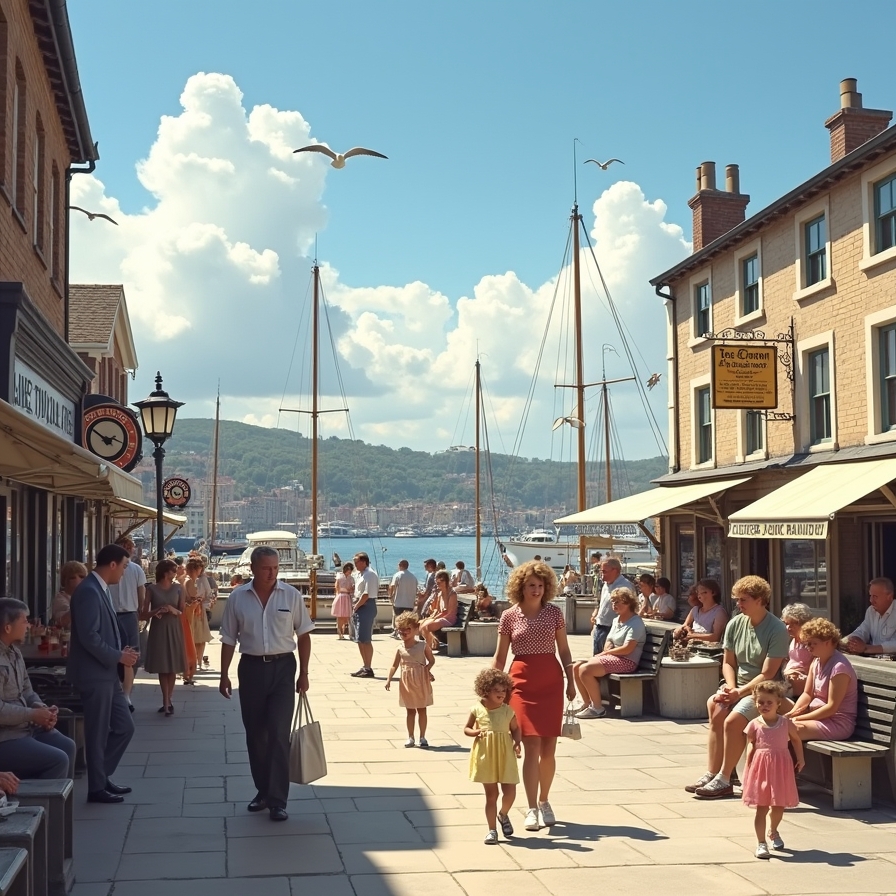
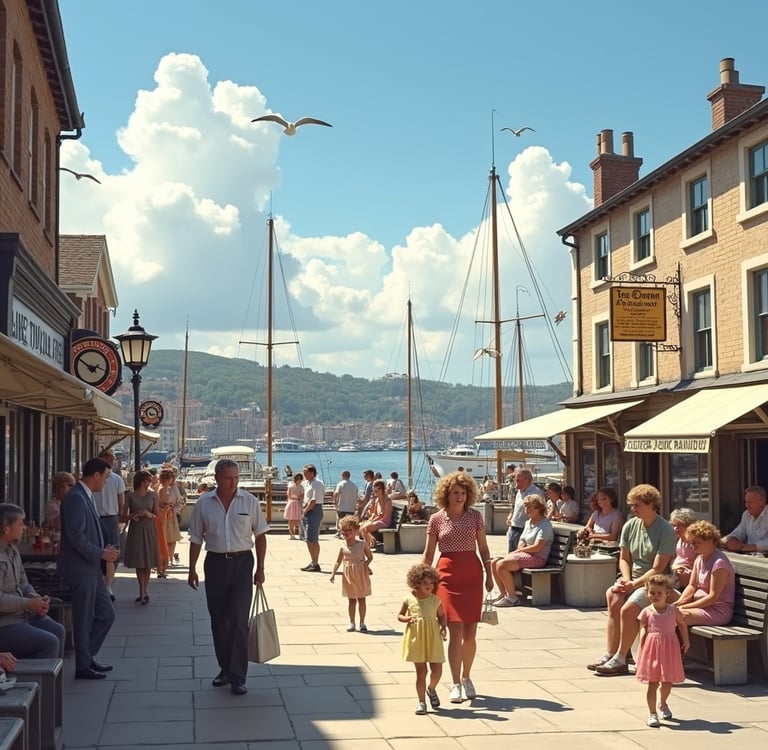
Growing Up in Poole: Memories of the Quay in the 60s and 70s
Long before it was a backdrop for luxury apartments and high-end bistros, Poole Quay was a living, breathing, and occasionally quite smelly working port. For those of us growing up in the 60s and 70s—wandering down from the Waterloo Estate or pedaling our bikes toward the water—the Quay wasn’t a "destination." It was our playground.
It was a world of salt air, heavy industry, and a distinct lack of Health and Safety regulations that would make a modern parent faint. Here is what the "Old Quay" feels like through the lens of memory.
1. The Industrial Symphony
In the 1960s, the Quay was still a place of work. You didn't just see the water; you heard the clanking of cranes and the deep, chest-thumping thrum of coaster engines.
The Hamworthy Lifting Bridge was the star of the show. We’d wait for the bells to ring and the barriers to drop, watching the massive roadway tilt toward the sky to let a timber ship or a tanker through. There was a specific rhythm to it—the smell of diesel and the screech of metal that signaled the town was "open" or "closed."
2. Poole Pottery and the Blue Tiles
You couldn’t talk about the Quay without mentioning Poole Pottery. Back then, it wasn't just a shop; it was a massive, sprawling factory right on the water’s edge.
I remember the distinctive "Poole Blue" and the artists sitting in the windows, painting those iconic floral patterns with steady hands. As a kid, the "seconds" shop was a treasure trove where you could find a slightly wonky mug for a few pence. It felt like the creative heart of the town, bridging the gap between the rough docks and the artistic soul of Dorset.
3. The Smell of the Sea (and Vinegar)
If I close my eyes, I can still smell the Quay on a Saturday afternoon:
The Mud: When the tide was out in the Harbour, it had that pungent, sulfurous "Poole pong" that you just got used to.
The Cockle Stalls: White wooden stalls selling little plastic cups of cockles, whelks, and mussels doused in far too much malt vinegar.
The Lord Nelson: The scent of stale ale and tobacco wafting out of the pub doors. In the 70s, the pubs along the Quay felt like proper "sailor" establishments—rough around the edges and full of characters who looked like they’d been carved out of old driftwood.
4. Crabbing and "The Wall"
The ultimate low-budget entertainment was crabbing. All you needed was a ball of string, a weighted net (or a plastic bucket if you were brave), and a piece of particularly nasty, sun-warmed bacon.
We’d sit on the edge of the stone quay, legs dangling over the side, waiting for that tell-tale tug. The goal was to catch the legendary "King Crab," though most of the time we just ended up with a bucket of green shore crabs that we’d dutifully release at the end of the day, watching them scuttle back into the dark, murky depths.
5. The Transition: From Coasters to Condos
By the late 70s, you could feel the tide turning. The big commercial ships were starting to favor the deeper berths at the Ro-Ro terminal, and the Quay began its slow metamorphosis into a leisure hub. The first "fancy" restaurants started to appear, and the grit began to be scrubbed away.
But for those of us who remember the grease on the cobbles and the sight of the coal ships unloading, the Quay will always be a place of gears, salt, and mud. It was a place where a child could feel small against the scale of the world’s oceans, right at the end of a Dorset bus route.