
Naming Characters: Why a Name Must Fit the Era (1900s vs. Epic Fantasy)
In the toolkit of a narrative technician, a character’s name is much more than a convenient label. It is the first line of code in your world-building. A name establishes immediate parameters for a character's background, social standing, and—most importantly—the very reality they inhabit. When you get a name right, it anchors the setting effortlessly. When you get it wrong, the entire narrative illusion shatters like dropped china. This is especially true when navigating the sharp stylistic divide between the historical realism of the early 1900s and the expansive canvas of Epic Fantasy.
A. THE "ADD-ONS"
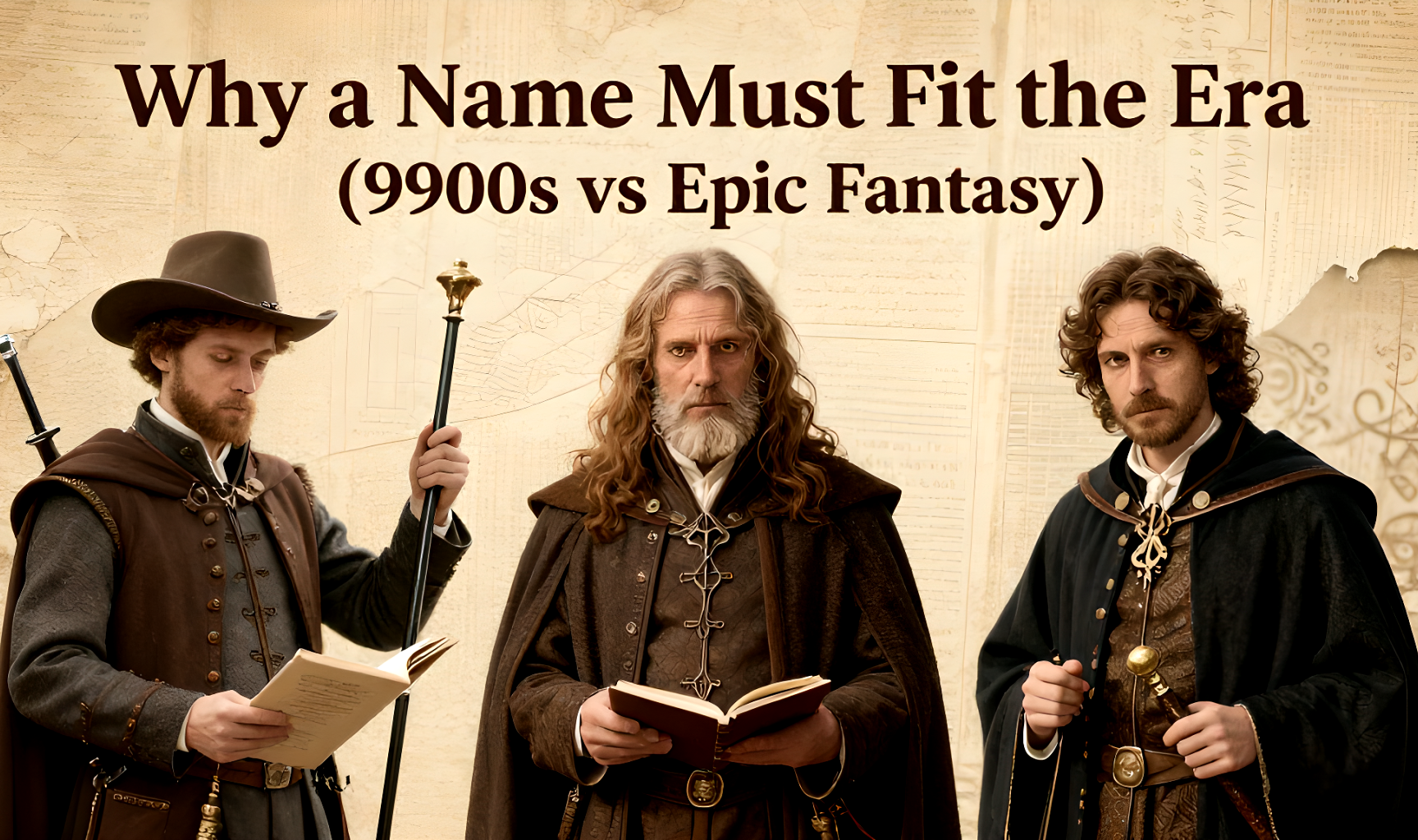
Naming Characters: Why a Name Must Fit the Era (1900s vs. Epic Fantasy)
In the toolkit of a narrative technician, a character’s name is much more than a convenient label. It is the first line of code in your world-building. A name establishes immediate parameters for a character's background, social standing, and—most importantly—the very reality they inhabit.
When you get a name right, it anchors the setting effortlessly. When you get it wrong, the entire narrative illusion shatters like dropped china. This is especially true when navigating the sharp stylistic divide between the historical realism of the early 1900s and the expansive canvas of Epic Fantasy.
The 1900s: The Weight of Social Code and Ancestry
Writing in an early 20th-century or Edwardian context requires adherence to historical realism. In the 1900s, names were not chosen out of a hat based on aesthetic preference; they were reflections of family heritage, religious ties, and rigid social hierarchies.
The Traditional Anchor: Names in this era were heavily recycled within families. You see an abundance of names like Arthur, Thomas, Margaret, and Florence. These names carry a specific gravity—they sound grounded, industrious, and bound by societal expectations.
Class Signifiers: A name instantly placed a character on the social ladder. An aristocratic lineage might yield a Reginald or a Gwendolen, while a working-class family down by the docks might favor a sharp, functional Jack or Nellie.
The "Anachronism Error": If you drop a modern, stylized name into a 1900s setting, the historical immersion breaks immediately. A character in a gaslit parlor cannot be named Jaxson or Luna without screaming of the 21st century. The names must feel like they belong to an era of steamships, pre-decimal currency, and strict social etiquette.
Epic Fantasy: Phonetics, Linguistics, and Myth-Making
Move the needle over to Epic Fantasy, and the rules of the universe change entirely. Here, you aren't bound by parish registers or historical data; instead, you are constructing a linguistic framework from the ground up.
Phonetics as World-Building: In fantasy, the sound of a name tells the reader about the culture before you even describe it. Harsh, gutteral consonants (like Kragor or Thrum) evoke a hardier, martial society. Sibilant, flowing vowels (like Aeliana or Seraphina) suggest an ancient, magical, or ethereal lineage.
Avoiding the "Bob" Problem: The greatest risk in fantasy naming is the jarring collision of the mundane with the mythic. If an ancient prophecy foretells the coming of Xannu, Pika'Al, and... Dave, the epic scope deflates instantly. The names must match the grand scale of the world's mythology.
Constructed Consistency: A technician ensures that characters from the same fantasy realm share a linguistic root system. If one character from a desert empire is named Zuberi, their brother shouldn't be named Boromir. The names must feel like they evolved from the same fictional tongue.
The Structural Blueprint for Naming
Whether you are cataloging characters for an Edwardian paranormal piece or mapping out a multi-volume epic, the diagnostic process remains identical:
Naming ElementThe 1900s ApproachEpic Fantasy ApproachPrimary SourceHistorical census data, old street directories, family trees.Invented linguistics, cultural phonetics, mythic roots.FunctionDefines class, lineage, and adherence to societal norms.Defines species, culture, and alignment with ancient lore.The TrapUsing modern linguistic trends (Anachronism).Mixing incompatible phonetic styles within the same region.
The Final Edit
Ultimately, names are the emotional and structural scaffolding of your prose. In a 40,000-word episode or a sprawling standalone story, a reader will encounter a character's name thousands of times. If that name harmonizes perfectly with the environment—whether it's the soot-stained streets of a historical port town or the prophetic plains of an invented realm—the reader stops seeing the words on the page and starts seeing the world.
How do you approach naming your characters? Do you prefer hunting through dusty historical archives for the perfect period-accurate name, or do you enjoy the linguistic puzzles of creating something entirely new?