
Reader Q&A: Answering the Most Common Questions About the Southern Lands
Welcome to the workshop floor for this week's blog post! When diving into an expansive landscape governed by ancient lore, strict magical physics, and continental histories, the questions accumulate quickly in the comment sections. As a narrative technician who prefers to hard-code the rules of a universe before writing Chapter One, I treat reader questions like a vital system diagnostic. They show me exactly where the lore is compiling beautifully in your minds and where you want to dig deeper into the mechanics of the world. Today, I’m pulling back the curtain on The Southern Lands to answer the most common questions from the readers.
D. DEEP DIVES
Reader Q&A: Answering the Most Common Questions About the Southern Lands
Welcome to the workshop floor for this week's blog post! When diving into an expansive landscape governed by ancient lore, strict magical physics, and continental histories, the questions accumulate quickly in the comment sections.
As a narrative technician who prefers to hard-code the rules of a universe before writing Chapter One, I treat reader questions like a vital system diagnostic. They show me exactly where the lore is compiling beautifully in your minds and where you want to dig deeper into the mechanics of the world.
Today, I’m pulling back the curtain on The Southern Lands to answer the most common questions from the readers.
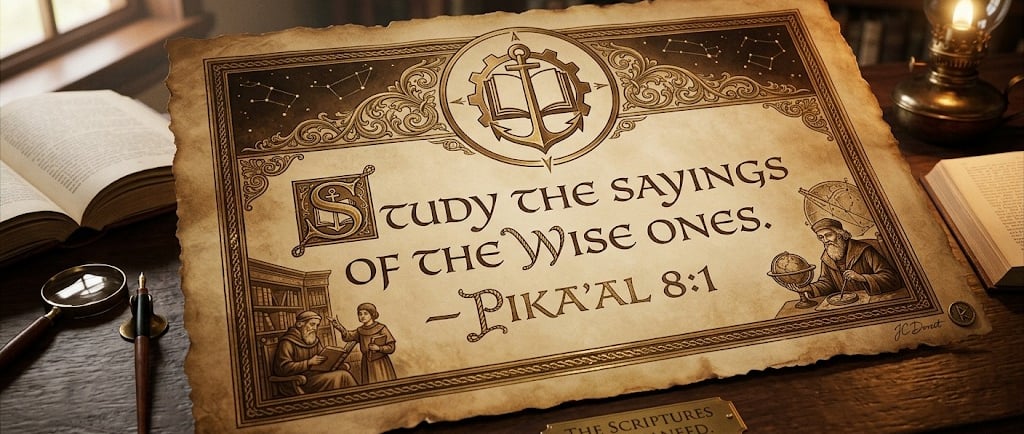
Q: Who is Pika’Al, and why are his scriptures so practical?
A: This is by far the most frequent query hitting the studio inbox. Unlike standard fantasy scriptures that default to cryptic doom-mongering or ethereal poetry, the maxims of Pika’Al are intensely action-oriented, practical, and grounded in human agency.
Take the core directive that drives so many of our protagonists:
"Be positive and plan for success." — Pika'Al 14:2
Pika’Al wasn't a remote, detached deity whispering riddles from the clouds. He was a master strategist who understood that hope without a blueprint is entirely useless. In my Southern Lands universe, victory is an engineering problem that requires preparation, deliberate choices, and hard work. The scriptures exist to provide characters with a functional, micro-level code of conduct to steady their hands when everything else crashes around them.
Q: Why do you include a detailed map in every single book?
A: Because a map is the ultimate structural guardrail against "narrative teleportation." Before a single chapter is written, the map acts as the world's source code. If I don’t know the physical distance between two regional factions, I can’t accurately calculate the logistical reality of the characters' journey.
[ THE SOUTHERN LANDS LOGISTIC FLOW ]
+-------------------------------------------------+
| 1. THE MAP: Establishes terrain & hard borders. |
+-------------------------------------------------+
|
v
+-------------------------------------------------+
| 2. THE CHRONOLOGY: Forces characters to face |
| the physical reality of travel and distance. |
+-------------------------------------------------+
If a protagonist needs to cross a mountain range or navigate a treacherous river system, the map forces me to respect the topography. It ensures that the grueling weight of a journey is felt by the characters and, by extension, the reader. Furthermore, a map provides a dense, rich visual anchor while keeping your imagination entirely free to paint the faces of the cast yourself.
Q: What is the relationship between the maxims of Pika’Al and the Prophecy of Xannu?
A: Think of them as two different scales of the same complex engine.
The Prophecy of Xannu handles the macro path of destiny. It is a sprawling, ancient, and intentionally ambiguous system of indicators. It outlines the massive shifting currents of the continent, though its cryptic wording is frequently subject to dangerous misinterpretation by various factions.
The Maxims of Pika’Al handle the micro execution. When a character is completely overwhelmed by the terrifying ambiguity of a grand prophecy, the practical, rule-bound verses of Pika’Al show them how to take the next logical step forward. The prophecy defines the destination, but Pika'Al provides the compass.
Q: Why do the villains in the Southern Lands quote scripture just as much as the heroes?
A: Because a well-written villain doesn't think they're the villain; they think they’re the technician fixing a broken world.
The scriptures of Pika’Al are highly logical, prioritizing strategy, preparation, and success. A ruthless conqueror can easily look at a verse about "planning for success" and use its cold, programmatic logic to justify a devastating quest for absolute control. This systemic misinterpretation is where the deepest narrative tension lives. It turns the scripture into a mirror, reflecting the true internal code of whoever is wielding the text.
The Final Compile
Building The Southern Lands is a continuous, iterative process, and your curiosity is the fuel that keeps the world-building tech trees expanding. By treating ancient texts, detailed cartography, and prophecies as rule-bound, interconnected systems, the stakes remain high for the characters, and the world feels authentic from page one to the final chapter.
Keep the diagnostic questions coming—the workshop doors are always open.